November 16, 2013

Book to Boogie

Book to Boogie is a monthly series on The Library as Incubator Project that pairs picture books with dance and movement activities for preschool story time. Some of the books featured recently are...


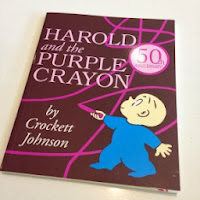
Yours truly had the privilege of contributing this month's idea. I picked one of my favorite books: 

To read the ideas, click the covers above or see the entire series here:


Follow on Bloglovin

March 26, 2013

Cindy Moo


Title: Cindy Moo
Lori Mortensen (Author)
Jeff Mack (Illustrator)

Comprehension Strategy: Questioning                       
Art Modality: Creative Movement

Summary:
One night on the farm, the cows overhear a fantastic tale. “Hey Diddle Diddle, the cat and the fiddle, the cow jumped over the moon!” Inspired by this classic rhyme, a plucky cow named Cindy Moo sets out to prove that cows really can leap over the moon. The other cows laugh at her, but that doesn’t stop Cindy from trying—and failing—night after night . . . until a trick of nature shows Cindy a way to triumph. As delightfully silly as the original nursery rhyme, this hilarious picture book will have readers of all stripes (and spots) cheering for its determined heroine. (HarperCollins)

Materials:
Cindy Moo
hula hoops
white paper plates

Lesson:
It’s time to get your kids “moo-ving!” All you need is a copy of this book and some hoops. (Real rain puddles would be best, but...well, they’re wet.) Begin by making sure that all of your little ones are familiar with the nursery rhyme “Hey Diddle Diddle.” For fun you can check out the many versions of the rhyme/song on YouTube. Here are two I liked. The first has the words and a pleasant version of the tune. The second video is from vintage Sesame Street.


And now introducing...Cindy Moo! She’s the determined cow that is going to help your young readers practice our comprehension strategy of the day: questioning. After all, Cindy Moo wouldn’t be where she is today (famous) if she hadn’t asked the question, “WHY can’t a cow jump to the moon?” Let the questions begin before you even open the book. Just look at the cover. WHY is the cow jumping? WHAT are the three cows on the back thinking as they look on? 

Now on to the first pages...WHY is the cow peeking out of the barn? WHAT is the girl reading? And before too long, the burning question..."WHY can’t a cow jump to the moon?” Give your listeners time to discuss the issues, just as the cows in the barn did that very night. To really stretch their thinking, insert a question that isn’t in the book. Ask students to problem-solve with partners. If a cow wanted to jump over the moon, HOW could it be done? You might get some pretty creative answers! Continue reading to find out how Cindy Loo finally makes it over the moon.


After the book, show your kids a mighty-fine, bovine time with this movement activity. First locate some hoedown style music on the internet. I found this fun music
Take your kids to a gym or open area. Arrange your hula hoop puddles throughout the area. Place a paper-plate moon in each puddle. Now just play the music and encourage the kiddie cattle to start jumping puddles. Yee-Haw!


For an inside peek into the book click here!


March 6, 2013

The Little Little Girl with the Big Big Voice


The Little Little Girl with the Big Big Voice
Kristen Balouch (Author & Illustrator)

Comprehension Strategy: Inferring                  
Art Modality: Drama

Summary:
There once was a little, little girl... with a BIG, BIG voice.
One day she went to find someone to play with.

In this vibrantly illustrated picture book, one loud little girl looks for a friend to play with. She searches the jungle high and low for a pal, but her BIG voice scares all the animals away! One by one, an elephant, a snake and a croc quickly retreat away from her booming vocals, until at last she finds the perfect playmate-whose "roar" is even louder than hers! (Summary from Simon & Schuster.)

Materials:
The Little Little Girl with the Big Big Voice

Lesson:
Let me say this loud and clear. “THIS IS A FUN BOOK!” In fact, when I saw this book it screamed, “BUY ME!” This simple story is useful at the beginning of the year when you are teaching appropriate voice volume and you are focusing on classroom management. It also works beautifully if you want to zoom in on inferring. So if your classroom sounds like a jungle, open the book and try this lesson.

Before reading, place a sticky note over the little girl on the cover. Without showing the illustrations, read the beginning of the book in which the little girl attempts to make friends with the elephant, snake, and crocodile. Ask students to make inferences about what might be scaring the animals away. Read the beginning again, this time showing the pictures. Allow students time to continue making inferences. Continue reading, making sure to pause after you read, “But the lion looked at the little girl...” After sharing predictions. continue reading, but pause again after, “And the little girl looked at the lion...” Your students will love the surprise that follows and will join in laughing with the girl and the lion.


Now I just bet that you already have in mind a little, little child from your own class that as a big, big voice. Give that child a chance to use that voice in a dramatic retelling of the story. Invite students to play the roles of the girl, the elephant, the snake, the crocodile and the lion. Prepare the actors by talking about how each of the animals would move and what they were doing in the story. For example, the elephant is blowing bubbles and the snake is swinging. How would the elephant run away? How would the snake escape? As you reread, invite the students to act out the story. Repeat with additional groups of five children.


Want to make sure your voice can be heard? Need to make your little “loud mouth” even louder? Here’s a link for a printable megaphone:

Finally, here’s an analogy map to use with the story. Use it to make a class chart or provide copies so the students can make their own.


July 28, 2012

A Ball For Daisy


Title: A Ball for Daisy
Chris Raschka (Illustrator)

Comprehension Strategies:
Inferring
Making Connections
                       
Art Modalities:
Drama
Storytelling

Summary:
Any child who has ever had a beloved toy break will relate to Daisy's anguish when her favorite ball is destroyed by a bigger dog. In the tradition of his nearly wordless picture book Yo! Yes?, Caldecott Medalist Chris Raschka explores in pictures the joy and sadness that having a special toy can bring. Raschka's signature swirling, impressionistic illustrations and his affectionate story will particularly appeal to young dog lovers and teachers and parents who have children dealing with the loss of something special. (Summary from Random House.)


Materials:
A Ball for Daisy
red ball

Lesson:
Here’s a book for the dog days of summer. In fact, here’s a book for any day that has been just plain  “ruff.”

There are a couple of reasons you might want to share this book first with a small group. As you know, wordless picture books can be powerful literacy tools. As students “read” the pictures, allow time for them to create narration. Encourage students to look at the pictures and retell the events to partners. As they retell, help students discover the elements of story and the sequence of events. Another reason to start with a small group is the opportunity for sharing personal connections. You little ones are sure to connect to how Daisy felt about the new toy, the broken toy and the new friendship.

To encourage students to make connections to the events and Daisy’s feelings, find a red ball and gather your group into a circle. Gently toss the ball to a volunteer who is ready to tell about a time that he experienced a loss such as a broken toy. (Older students may be able to make the connection to more significant life losses.) After the student shares his connection, have him toss the ball to another friend in the group.

Try these drama activities to help students infer what Daisy is thinking and how she is feeling throughout the story. Begin by asking each child to pretend she is Daisy. As you show each illustration, have each child say out loud what she (as Daisy) is thinking. Don’t worry about everyone talking at once...simply encourage students to think about the events and carefully study the details in the illustrations to narrate the story from the dog’s point of view.

Older students will enjoy retelling the story with this second drama extension. Put students in groups of four. Each child will play a character (Daisy, Daisy’s owner, the second dog, or the second dog’s owner). Direct the students to act out the story, saying what they think their characters would say in each scene. You might want to guide students in acting out the story with these parts:
Scene 1: Daisy gets the red ball.
Scene 2: Daisy goes to the park with the ball.
Scene 3: The second dog pops the ball.
Scene 4: Daisy misses her ball.
Scene 5: Daisy gets a new ball at the park.


Finally, here are some graphic organizers and writing frames for this story. They were designed to help your youngest readers turn their thinking into writing, but they are useful with older students as well. Just click on the links to download them for free. (If you like these graphic organizers and writing frames, be sure to check out my Smart Charts store on Teachers Pay Teachers or Teachers Notebook.)


Having a ball with this book? Catch this teacher guide provided by Random House:

http://www.randomhouse.com/catalog/teachers_guides/9780375858611.pdf

April 3, 2012

All the World


All the World
Liz Garton Scanlon (Author)
Marla Frazee (Illustrator)

Comprehension Strategy:
Synthesizing

Art Modality:
Music

Summary:
All the world is here.
It is there.
It is everywhere.
All the world is right where you are.
Now.

Following a circle of family and friends through the course of a day from morning till night, this book affirms the importance of all things great and small in our world, from the tiniest shell on the beach, to warm family connections, to the widest sunset sky. (Summary from Simon & Schuster.)

Materials:
All the World

Lesson:
Here’s a book to help you welcome spring and celebrate Earth Day. As I recommend this book, I’m sitting on a screened porch, looking at my mother’s garden (“All the world’s a garden bed.”), listening to the birds sing (“Nest, bird, feather, fly. All the world has got its sky.”) and watching my son with his grandparents (“All the world is old and new.”).
Perfect.

“All the world can hold quite still.”
I hope you can find a moment in your busy world to hold still and listen to this book. Just click here for a heartwarming song and view of the book:


To share this book with your class and encourage the thinking work of synthesis, you might want to discuss the book spread by spread. I simply asked, “What is going on here? What do you think it means?” Then I listened and the students listened to each other. When you arrive at the end of the book, ask once more, “Now what does it all mean?” You’ll be amazed at the insight and wisdom that will come out of the mouths of your babes. It’s a simple lesson, but with an effort on listening and thinking, students will have good practice at putting the parts of a text together to make meaning and to find a theme. Since singing together is one sure way to build community, you’ll want to invite the children to sing along with the video for several days. Each day, invite the children to discuss together what they think about the author’s message. How does the illustrator help us find meaning in the poem?

"Hope and peace and love and trust. 
All the world is all of us."
Blessings,
Jayne

A world-wide-web of information....
For a simply lovely teacher’s guide, click this cover:
To listen to Marla Frazee talk about her illustrations, click on this scene:


March 24, 2012

New Friends...and some Chickens...at the Georgia Children's Lit Conference

  ABCs of reading went live today! I presented a session at the annual Conference on Children's Literature at the University of Georgia. We had so much FUN! I told the teachers in the group, "What happens in room E, stays in room E." However my new friend and first-grade teacher gave me permission to post this photo of her acting like a chicken. If you are wondering why, just click the book cover to go to the idea.

Here's another fun teacher...she's a professor of children's literature at Valdosta State. I'm telling you that just to make her students happy. There could be blackmail for good grades involved with this photo.
I think I found a soul sister in "Catherine Drama." Also a special thanks to my "Auburn" buddy who helped me clean up. She provided good company and conversation at the luncheon.

Finally, another presenter shared some great ideas for one of my feature books Yesterday I Had the Blues. You can see her work here: http://yesterdayihadtheblues.weebly.com/ and my original post by clicking the book cover.
Thank you to all the ladies that attended the session today. All names have been removed from the blog to protect the innocent. I know I said "What happens in room E, stays in room E." But I didn't really mean it. I hope you take the ideas and use them with your kids! (Please send pictures.) Have lots of fun using the arts to teach the comprehension strategies. 
Happy Teaching! 
Jayne