August 13, 2011

Pete the Cat: Rocking in my School Shoes


Title: Pete the Cat: Rocking in My School Shoes
Eric Litwin (Author)
James Dean (Illustrator)
Amazon Link: Pete the Cat: Rocking in My School Shoes


Comprehension Strategy: 
Making Connections (Using prior knowledge, activating schema, text-to-self connections) 
Art Modality: Music and Movement

Summary:
Pete the Cat is back—and this time he’s rocking in his school shoes. Pete discovers the library, the lunchroom, the playground, and lots of other cool places at school. And no matter where he goes, Pete never stops moving and grooving and singing his song . . . because it’s all good. (Summary from HarperCollins Childrens Books.)

Materials:
Pete the Cat: Rocking in My School Shoes
Red high-top shoes (Optional but totally desirable)

Lesson:
I’m back in school and I’m blogging in my school shoes! The first step in this groovy lesson is to download the free song and listen to it.
You’re dancing and singing already aren’t you?! But wait, it gets better. The next step is to watch the video:
The third step is to order the book, silly!
Amazon Link: http://www.amazon.com/Pete-Cat-Rocking-School-Shoes/dp/0061910244

Read aloud the book to your class. (I put my copy under the document camera while we listened to the song.) When your students are familiar with the words, create your own class book or powerpoint that will focus on verbs ending in -ing. To begin, create a class list of things kids can do in their school shoes. For example, “I’m counting in my school shoes.” Next take a picture of each child performing an action in his school shoes. Combine the pictures in a class book or powerpoint along with the simple, repetitive text. Finally, invite the class to read and sing along.
It’s all good.

Pete the Cat has a unique story. Find out more here:


For more groovy music, visit Mr. Eric at  Eric Litwin’s website:
http://www.ericlitwin.com/


I’m off to find some red high-top sneakers. Let me know if you find any. “I’m shopping in my school shoes...”


May 15, 2011

Questions, Questions


Title: Questions, Questions
Marcus Pfister 
(Author and Illustrator)
(Click this link to order from Amazon: Questions, Questions)


Comprehension Strategy: Questioning                        
Art Modality: Visual Art

Summary:
Pfister's latest book is a sweetly simple look at some very deep questions, allowing children the opportunity to delve into some of life's mysteries. ...In a world that so often emphasizes answers and solid facts, it is refreshing to see a text that encourages questioning, whether realistic or imaginative
flights of fancy. (Summary from Kirkus Reviews.)

Materials:
Questions, Questions
art paper or construction paper
pencils
cardboard (thick enough to hold a cutout shape, but not too thick for young children to cut)
acrylic paints in a variety of colors and silver
paintbrushes

Lesson:
Is there any question what this teaching idea is all about? What is the focus comprehension strategy? Questioning, course! What art modality? Visual art, it’s plain to see! You’ll want to begin by just reading this simply beautiful book aloud. After reading, you might want to let students partner-talk about answers to some of the questions. Or you might give students a chance to journal their answers to their favorite questions. And without a doubt, you’ll want to give students time to brainstorm and ask their own questions. Students will also enjoy finding the silver design on each page. Follow-up your class discussions and writing with this visual-art activity.

Mr. Pfister says, “The illustrations have been realized with a new technique. First I transferred each part of a picture onto a cardboard and then cut them out. Afterwards I colored the cutout pieces of cardboard with acrylics and stamped them onto aquarelle paper. Try this technique once with your kids! You will get very nice results...”
First have each student record a question to illustrate. Students may be invited to choose a question from the book, or ask their own questions. Each child draws the outline of a simple shape, “coloring-book style,” onto a piece of cardboard. He then cuts out the shape. Next he paints one side of the shape. Finally, he flips the painted shape over and presses it gently onto the paper. Slowly peeling the shape away from the paper will reveal the design. Students may then paint something near the design. Display the students’ questions along with their artwork. One question you’re sure to hear from colleagues... “Can I do that with my class, too?”
Here are some examples of my students’ questions and art:


So you have more questions about the author and illustrator Marcus Pfister? Visit his web site:


April 24, 2011

Beautiful Blackbird


Title:  Beautiful Blackbird
Ashley Bryan (Author and Illustrator)
Click the Amazon link to purchase: 
Beautiful Blackbird (Coretta Scott King Illustrator Award Winner)

Comprehension Strategy:          Synthesizing              
Art Modalities: Creative Movement, Visual Art

Summary: In a story of the Ila people, the colorful birds of Africa ask Blackbird, whom they think is the most beautiful of birds, to decorate them with some of his “blackening brew.” (Summary from the book.)

Materials:
Beautiful Blackbird
black tempera paint
feathers
various colors of construction paper
simple bird pattern

Lesson:
Synthesis takes place when readers’ thinking changes. Their thinking evolves. They infer meanings beyond the story line. They recognize themes.
Read aloud Beautiful Blackbird. To help your students recognize the themes, you might want to discuss the following lines from the story:

“Color on the outside is not what’s on the inside. You don’t act like me. You don’t eat like me. You don’t get down in the groove and move your feet like me.”

“We’ll see the difference a touch of black can make. Just remember, whatever I do, I’ll be me and you’ll be you.”

Extend the students’ understanding of the story by encouraging creative movement. Gather students in an open space such a gym. Reread the story. Have students move “with a flip flop flapping of their wings” and a “stirring, whirring of the air” as you read the description of the “Beak and Wing Dance” and the “Show Claws Slide.”

To prepare for a visual-art extension, mix some “blackening brew” (black paint) in a “medicine gourd.”
To make a bird, each child traces and then cuts out a simple bird shape from construction paper. She then uses a feather to paint on black accents. Display the birds on a yellow background along with the following poem from the story.

“Our colors sport a brand-new look,
A touch of black was all it took.
Oh beautiful black, uh-huh, uh-huh
Black is beautiful, UH-HUH!”

 "Meet" Ashley Bryan at Reading Rockets.

More from Ashley Bryan, Uh-huh!


April 8, 2011

Bubble Gum, Bubble Gum


Title: Bubble Gum, Bubble Gum
Lisa Wheeler (Author)
Laura Huliska-Beith (Illustrator)

Comprehension Strategy: Visualizing               
Art Modality: Drama

Summary:
After a variety of animals get stuck one by one in bubble gum melting in the road, they must survive encounters with a big blue truck and a burly black bear. (Summary from book.)

Materials:
Bubble Gum, Bubble Gum
pink, plastic tablecloth cut into gum shape (see the cover of the book)
copies of the choral reading (for older readers)

Lesson:
Just when you need a lesson to liven things up, along comes a book like Bubble Gum, Bubble Gum—with ooey-chewy words and an icky-sticky story to get stuck on! After reading the story aloud, I introduced my group to a choral reading of the text. I can’t post the whole chant, but here’s a sneak peak to help you get the idea. (If you drop me an email, I’ll send you the entire choral reading. Just title your message “Bubble Gum” and send to jaynestamp@cox.net.)

Teacher:
Bubble gum, bubble gum,
Chewy-gooey bubble gum,
Icky-sticky bubble gum
Melting in the road.

Group 1:
Along comes a toad...
A fine, fat toad,
A fine, fat, wild
Splat!
Wart-backed toad.

All:
Ew! Yuck! The toad got stuck!

Reading this rhyme is kind of like chewing gum, the more you read, the smoother it gets. For even more fun, try this drama extension. In advance, cut an expensive, pink plastic tablecloth (available from dollar stores) into a bubble-gum shape. Place the shape on the floor of an open area. Select volunteers to be the toad, shrew, goose, bee, crow, black bear and hen. Ask these students to visualize how the animals would move before and after getting stuck in the mud. Read aloud the story as the students pretend to be stuck in the “gum.” When you read the part where the animals blow the bubble, have the students lift the tablecloth in the air as they would a parachute. “Bubble gum, bubble gum, light and lifty bubble gum!”

The toad and the bad-mood shrew are stuck!


They chewed and they chewed....


Along comes a big-bottomed bear!


Find out more about the author:


March 29, 2011

Yesterday I Had the Blues


Title: Yesterday I Had the Blues
Jeron Ashford Frame (Author), 
R. Gregory Christie (Illustrator)

Comprehension Strategy: Inferring                   
Art Modality: Poetry


Summary: Ever had the blues? Yesterday one boy had them bad—not just the ordinary blues, the "deep down in my shoes" blues, the "go away Mr. Sun quit smilin' at me" blues. But today he's traded in those blues for greens, the "runnin' my hands along the hedges" greens, the kind of greens that make him want to be SOMEBODY. With text that begs to be read aloud, and bold, colorful paintings, this book will have readers big and small pondering the spectrum of moods and how they can change from day to day. (Summary from Random House, Inc.)

Materials:
Yesterday I Had the Blues
chart paper
markers

Lesson:
Trying to teach your students to infer? Don’t let it give you the blues! First, read aloud this jazzy story. Follow up the reading with a discussion about each character’s emotions. Encourage students to use their background knowledge, the text clues, and the illustrations to explain the reasons for the feelings. Here’s the chart we made from our class discussion:


On another day, reread the story and review the chart. Use this poetry frame to encourage your students to think about their own feelings.

Yesterday I had the _________________.
The ________________________________________.

Today I got the ___________________.
The ________________________________________.

Tomorrow I hope I have the _____________.
The ________________________________________.

This poetry by my second graders gives me the pinks...the oh-so-happy, lips smilin’, tickled-pink pinks!


Do your kids have the blues? Let them watch this animated clip of the story. They’re sure to want to read along, and before you know it they’ll feel golden!

March 8, 2011

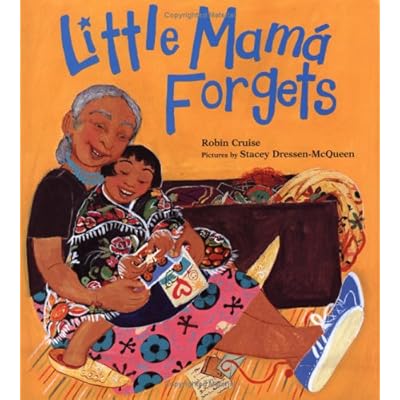
Little Mama Forgets


Title:  Little Mama Forgets


Robin Cruise (author), Stacey Dressen-McQueen (Illustrator)

Comprehension Strategy: Synthesizing                                   
Art Modality:  Poetry

Summary:
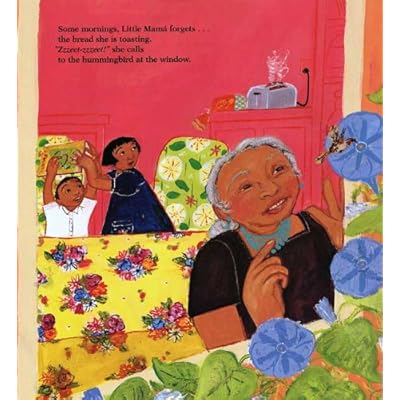
Although her Mexican-American grandmother now forgets many things, Lucy finds that she still remembers the things that are important to the two of them. (Summary from the book.)

Materials:
Little Mama Forgets
chart paper, markers

Lesson:
Your students are sure to remember this poetry lessons that is a follow-up for Little Mama Forgets. After reading the story aloud, invite the students to think about the things that Mama forgets and the things that she remembers. On a chart, list the things that Lucy, the granddaughter who tells the story, says that Mama forgets. Then list the things that Lucy says that Mama remembers. What do the things have in common? What types of things are on the "forgets" list as compared to the types of things on the "remembers" list? You may wish to lead students in a discussion about the relationship between Lucy and her grandmother. In addition, you might also want to discuss the things that Mama remembers from her youth and about her culture.

To prepare your students for a poetry follow-up, ask them to think about what they might remember when they grow old. Who are the people that are most important to them? What things do they do with those special people? What celebrations are important to their families? What are their favorite things to do? Is it easier to remember things that you have strong feelings about? Provide the following poetry frame to assist your students in writing free-verse poetry.

I might forget…
I could forget…
but I'll always remember…


Here are some sweet poems that my second graders wrote!


Mom        (by James, age 8)
I might forget what she wore.
I could forget when she fell down the steps.
But I'll always remember how she makes me cinnamon rolls.


Great Grandpa    (by Madeline, age 8)
I might forget how he sounded.
I could forget how he used to play the piano.
But I'll always remember when he held me in the hospital.


My Sister, Stella    (by Marlie, age 8)
I might forget that she slaps me in the eye.
I could forget when she first punched me.
But I'll always remember her smile and when she was born.


Grandma      (by Jake, age 8)
I might forget what she wore.
I might forget what she sounded like.
But I'll always remember that it may have been the loveliest voice anyone heard.


Learn more about the author: http://robincruise.com